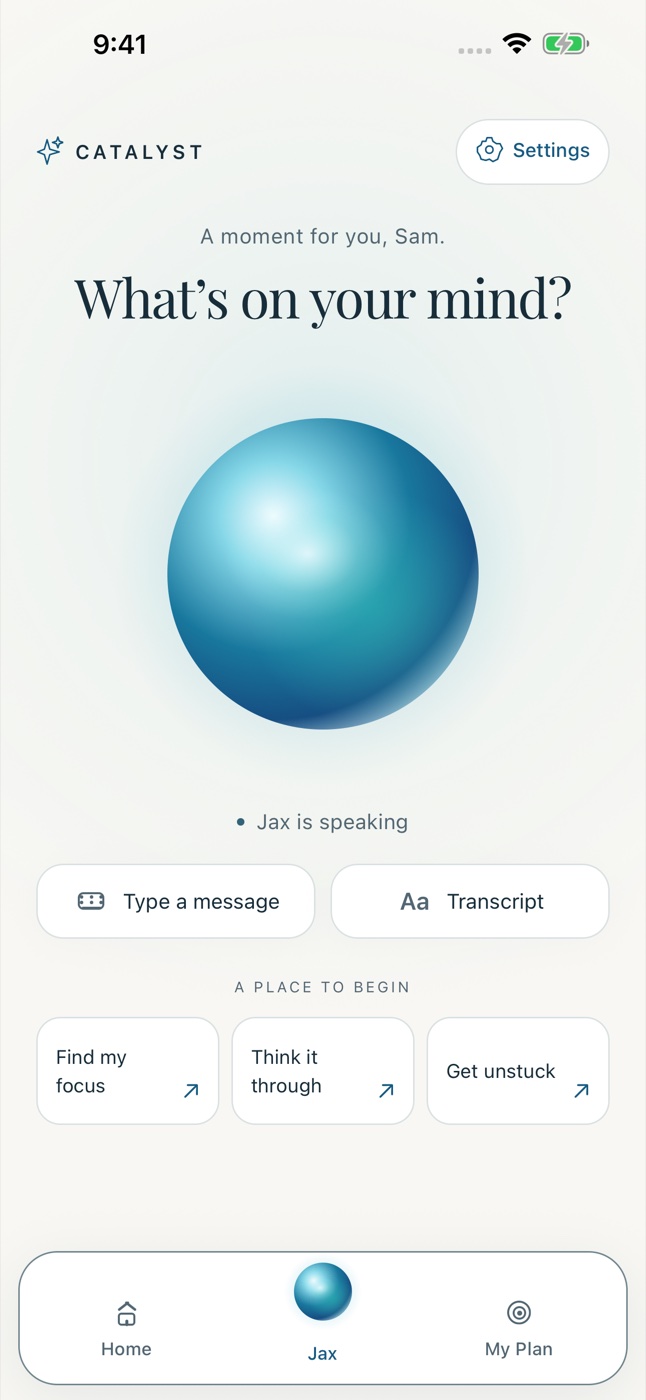
A useful thought can appear while walking, cooking, driving, showering, or switching between tasks. By the time you find the right app or notebook, the edge of it is gone.
The problem is not that you do not care. It is that capture systems often require too much ceremony.
If this sounds familiar, it sits near the same follow-through pattern explored in voice first productivity app review.
Thoughts vanish in the handoff
A useful thought can appear while walking, cooking, driving, showering, or switching between tasks. By the time you find the right app or notebook, the edge of it is gone.
The problem is not that you do not care. It is that capture systems often require too much ceremony.
Capture first, sort later
The fastest capture is the one you will actually use. A short voice note can hold the idea without demanding that you categorize it immediately.
Sorting is a different task. Do not make the thought wait for the perfect filing system.
You can say:
"Jax, capture this before it disappears. I will sort it later."
Voice helps here because it lets the messy truth arrive before you over-organize it. You do not have to make the feeling polished before you ask for support.
Say the rough version
You do not need a polished sentence. Say the phrase, the image, the worry, the next step, the name, the connection.
A rough capture is better than a perfect thought that disappears.
Make review gentle
Later, ask what the thought is for. Is it an action, an idea, a reminder, or something to let go?
The goal is not to hoard every thought. It is to stop losing the ones that matter.
A simple way to begin today
Choose one ordinary action that would make the topic less abstract. Do not choose the whole transformation. Choose the doorway.
Say what is true, name the smallest useful move, and stop before the plan becomes a performance. If the move still feels too big, shrink it until it sounds almost boring. Boring is often where follow-through becomes possible.
What to notice before you change anything
Before you try to fix the thought, notice the exact moment where it becomes hard. Is it the beginning, the decision, the transition, the fear of being judged, or the quiet belief that you should already be better at this?
That moment is useful information. It tells you where the support has to meet you. If the hard part is starting, a larger plan will not help much. If the hard part is choosing, another reminder will not solve it. If the hard part is shame, more pressure may only make the avoidance more convincing.
Try to describe the stuck point without turning it into a character statement. Not "I am bad at this." More like: "I lose the thread after the first interruption," or "I do not know what the next physical action is," or "I make the decision so large that I cannot touch it."
The more specific the stuck point becomes, the less it has to become your identity.
Make the support fit the stuck point
A lot of productivity advice fails because it gives the same solution to every problem. Make a list. Wake up earlier. Use a planner. Block the calendar. Those can help, but only when they match the actual friction.
If capture is missing, start by creating contact. Say the truth out loud. Put the page in front of you. Ask one question. Gather the materials. Open the conversation. The first move should reduce fog, not prove discipline.
If energy is low, shrink the standard. If the plan is vague, name the next physical step. If the task feels emotionally charged, separate the task from the story around it. If you have already drifted, make the return path smaller than the guilt.
This is not about lowering your standards forever. It is about choosing a door you can actually walk through today.
Keep the next step visible
After you make contact, leave yourself a visible next step. Write it in plain language. Put it somewhere obvious. Make it small enough that tomorrow-you does not have to decode a whole system before beginning.
A good next step sounds almost ordinary: open the document and write the title, put the form by the door, choose one option to test for a week, send the first honest message, talk through the plan for three minutes.
When the next step is visible, saving the idea takes less emotional negotiation. You are not asking yourself to rebuild the whole reason from scratch. You are simply picking up the thread.
If you fall away, return without drama
You will not execute every plan exactly as imagined. That is not a failure of the plan; it is a normal part of being a person with changing energy, interruptions, moods, responsibilities, and limits.
The question is whether the system lets you return. A brittle system turns one missed day into evidence. A humane system asks what changed and what still matters.
When you come back, do not start with punishment. Start with information: what happened, what is still true, what can shrink, and what is the next honest move? That is enough to reopen the thread.
Let Jax catch the thought before it fades.